I remember the confusion first, then the disbelief. The domain I'd been turned down for was listed for sale online, instant transfer switched on, at half the price I'd offered its owner a few months earlier.
I'd wanted that name for a long time.
In January 2019 I bought a small board for side projects. It earned a little, and it came with a newsletter and a list of people who bought and sold small things online. About a year later it became Indiemaker. On a.co, because the.com belonged to someone else.
A.com is better than a.co. Nobody needs that explained. So I emailed the owner directly and made an offer. Double what I eventually paid, as it turned out.
They said no. They wanted more.
What I couldn't put in that email was why I'd offered so much. The name was worth far more to me than to them, and the reason had nothing to do with the name.
To its owner, indiemaker.com was a domain with nothing behind it. To me it was the missing half of something I already owned. The board had readers, sellers, a newsletter and the goodwill that goes with them, all of it sitting on the lesser address. Put the two together and each is worth more than it was alone. The name gets a business. The business gets its name.
No seller can price that. They only know what's in their own hands.
When you build, you make every piece yourself, in order, and wait for each one to be good enough before the next can start. When you buy, you can go straight for the pieces that take longest – a list of people who already trust you, a name, a few thousand users – and fit them together. Each new piece raises the value of the ones you already hold.
The seller is pricing one piece. You're pricing the set.
There's a catch, and it's the same thing that makes it work. The set is only worth more while somebody runs it. A list you never write to is just a list. A name with nothing behind it goes back to being a domain. The extra value exists because you'll do the work of joining the pieces, and it's gone the week you stop.
For years that somebody was me. I read every listing myself, at my desk, until there were too many to read and I had to hand it over.
The third piece wasn't a purchase. It was the software that now does the reading.
In September we checked our listing rules against every listing on the platform. One rule hadn't made it into the rulebook yet: listings have to be in English. The moderator was already enforcing it. There was exactly one language rejection in the whole database, on a German listing, and the note said it needed to be submitted in English with a link that went straight to the product. The machine was ahead of the rulebook, and nobody had noticed, including me.
The board took years to grow. The name took someone forgetting a listing. The system that runs them both was the one piece it made more sense to build than to buy.
Buy what takes years. Build what costs less to make than to buy.
That's how something small gets big quickly without a bank or an investor. Worth is relative, and it's most relative to whatever you already own.
It's also why I'd offered double, and would have paid it. If anyone was ever going to overpay for that name, it was me, and I'd put the overpayment in writing.
What I hadn't thought about is that being the right buyer only sets what you'd pay. The price on the day is set by whoever is paying attention. I suspect the owner forgot they'd listed it. I'll never know. For however long that listing sat there, the price belonged to someone who wasn't looking.
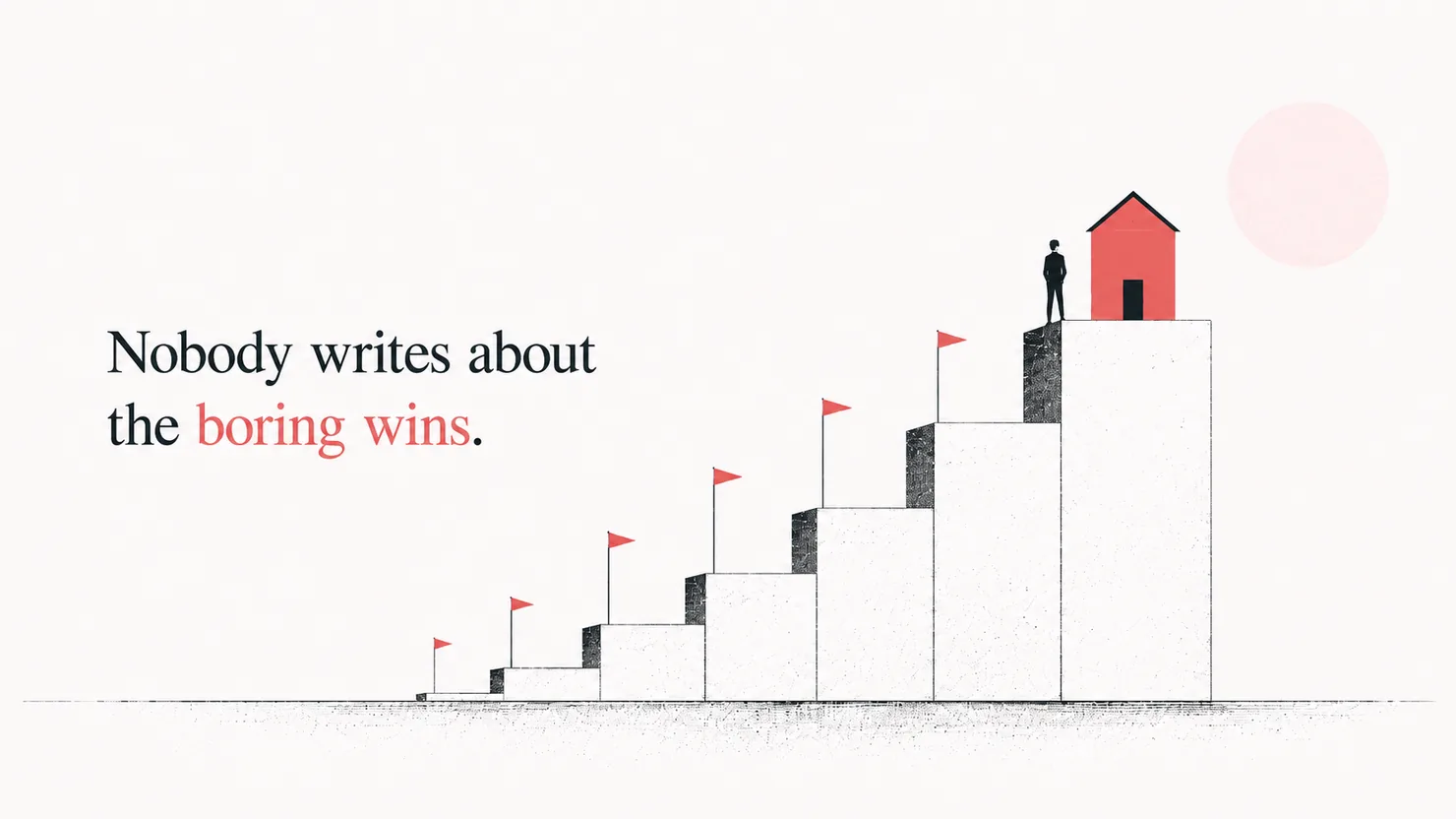
Nobody watches deals this size, and nobody writes them up. There was no announcement when a board for side projects changed hands, and there was none when a domain went to the only person who wanted it. Most exits look like that – small, unreported, and enormous to the two people involved.
I didn't trust the listing. I spoke to someone at Porkbun to check it was real, that it would transfer immediately, and that I wasn't about to pay for something that would vanish. It was real. I bought it on the spot.
It made my year.
← Back to Notes