We built a house over the wettest winter possible. I stood on site all winter with two tiny children, and we moved in to fresh paint and damp. Soon after, I was in hospital for a week. Home for two. Back in, and transferred for specialist care. On my first day home I fell in the shower.
It took a year to recover and eighteen months to feel strong. I was working again after three months, in little bits and not in top form – I never really stop. But the business didn't need me to work. It needed me to think, and I had very little left to think with.
It kept going because there were two of us. Sean – my business partner – ran the clients, the payroll and the cash flow, and the house, and the children. The business and the household both had one person left standing, and it was him.
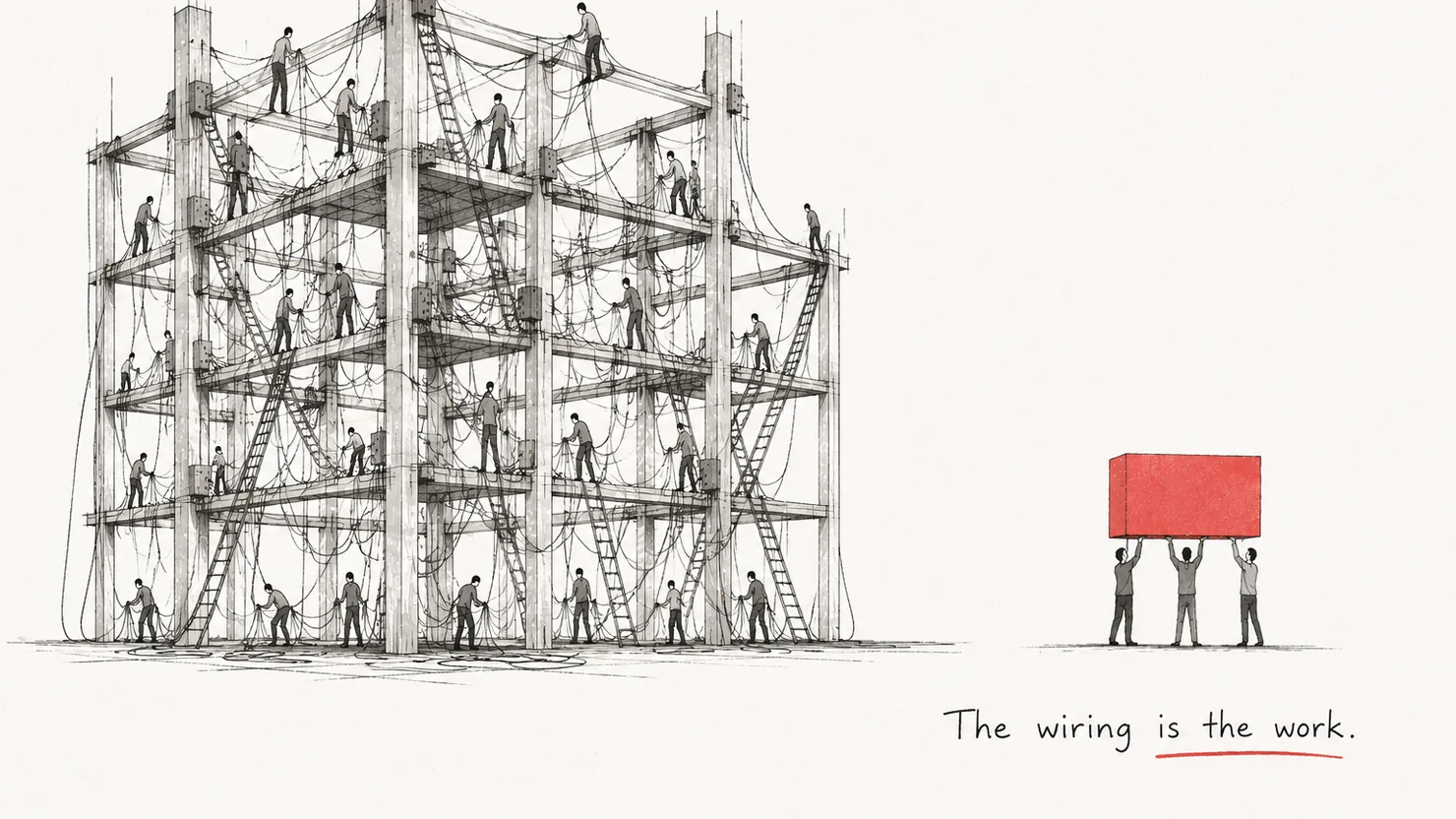
Nobody does it alone. Not even the people who say they did.
There's a story the independent world loves to tell about itself. The solo founder. The self-made operator who built it all from a bedroom with nothing but grit and a laptop. It's a good story. It's also, every single time I've looked closely, not quite true.
Behind the person who did it alone there is usually someone who answered the phone at the wrong hour. Someone who made the introduction that turned into the deal. The early customer who stayed when there was no good reason to. The partner who took on more at home so the work could happen at all.
The numbers make the myth look bigger than it is. In 2022 America had about 29.8 million businesses with no employees at all, and MBO Partners counted a record 74.9 million Americans doing independent work this year. Most of them aren't empires built alone in a bedroom. They're people who wanted agency over their week and arranged a working life to get it. And look closely at any one of them and it's rarely solo either: a few clients, a couple of subcontractors, a platform or two, someone at home covering the months that don't pay. It's less a lone hero than a small, loose network.
I think that network is where a lot of work is heading. Portfolio careers, several income streams at once: one person doing work they love, holding shares in a couple of companies, running a side project or two, maybe selling a small asset when it's outgrown them. From the outside it looks like going solo. From the inside it means more relationships, spread across more things.
That's a perfectly good way to design a life. It's a fragile way to grow a business, and the trouble starts when people confuse the two. A solo business has one point of failure, and it's you. If what you want is freedom and a week that fits, solo can be exactly right. If what you want is a business that grows, outlasts a bad year and might one day be sold, you'll need other people in it, and you need to be clear with yourself which one you're building.
The myth of the solo win is inaccurate, ungrateful and bad strategy – because if you believe you did it alone, you stop investing in the relationships that actually carry you.
That's what carries you when you can't carry yourself. The more things your working life is spread across, the more it depends on people in each of them: the client who'll wait a month, the contractor who can step in, the person who knows where everything is. A business partner or a life partner won't hurt either. In my case they were the same person, and for a year he was the whole network.
I didn't learn any of this from a book. I learned it in that hospital year. The best case for a partner isn't the work they do. It's the year you can't do any.
← Back to Notes