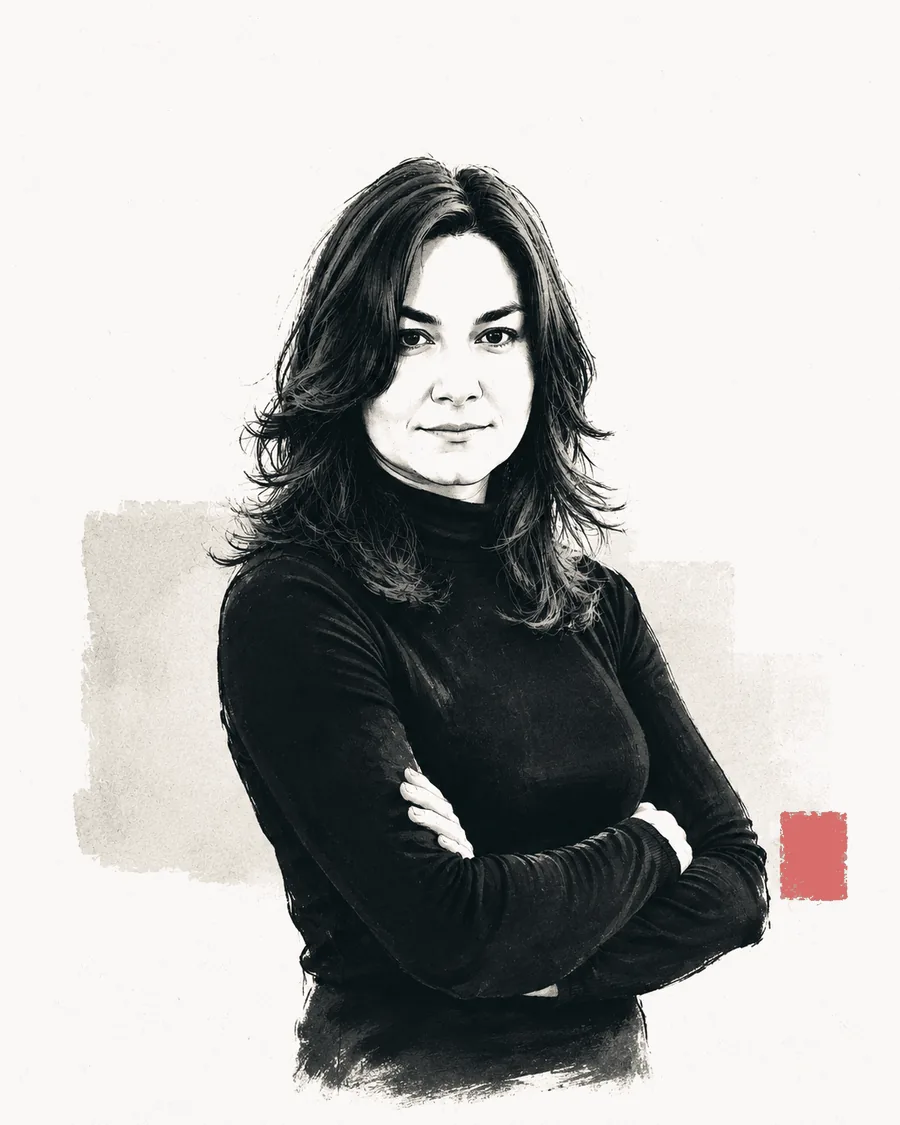
I've never raised venture capital, pitched to investors, or taken a business loan. Everything I've built has been self-funded, deliberate, and mine. That shapes how I think about business – and what's actually possible without outside capital or permission.
I grew up alongside the internet. Linux and Mozilla meetups, hacker spaces and innovation labs – I attended these back when they were just a small, obsessive and nerdy crowd. The oddity is that I'm not a programmer. That path taught me something useful: you don't need to write the code to understand deeply what software can do, and what it's worth.
Machine Republic, the boutique software studio I co-founded with my partner, has been running for sixteen years. We built it slowly and deliberately – small team, high trust, an eclectic mix of clients at every stage. That range taught me more about how businesses actually work than any single industry or model ever could.
Indiemaker came from a specific frustration: watching great software get buried when startups failed, not because the product was bad, but because circumstances intervened. I wanted to create a way for those assets to find new owners, new energy, new life. In 2019 I acquired a newsletter, rebranded and rebuilt it into a listing platform, lived through a pandemic with it, revamped it again in 2024. The response we've had – without us even trying – is the part I'm most grateful for.
Running things in parallel is just how I operate. Alongside Machine Republic and Indiemaker, I've invested in and exited several startups – a commercial property platform in Singapore, an expense-claiming SaaS, a B2B perks platform. I'm not a classical angel investor – I'm more interested in operational reality than cap tables. But I understand how value moves in this space, and I know how deals actually work.
The thread running through all of it is one idea: small exits are the dominant outcome in digital business, and that's not failure – it's actually the game. I trained in M&A because it gave language to something I was already doing by feel. I understand what investors want, how acquirers choose, and how things actually break in the middle.
Our kids homeschool and we learn and run things from wherever works. The businesses I build are designed to run without me standing over them. That's not accidental.
The next chapter is Indiemaker becoming the place small internet businesses change hands properly – where you can discover, compare and transfer them, and see where every number on a listing came from. The thesis hasn't changed since 2013. The world around it has.
If you're building something in this space – or thinking about your first acquisition, or your first exit – I'd like to hear from you. Drop me a line at [email protected], or see what I'm working on right now on the Now page.